My Hybrid Strength Training
My hybrid method of heavy compound lifts, calisthenics, and running hills that builds muscle, improves running economy, and keeps me durable through marathon training.
Why I Strength Train
I'm 52, and I'm not an elite athlete. I'm a guy who spent 25 years behind a desk and then got obsessed with the process: learning how the body works, testing it on myself, and keeping whatever actually holds up.
Most of it comes down to age old basics. Lift. Run. Stretch. Walk and move more. Eat well. Recover. There's nothing secret about any of them. The work is in learning how to do each one well, fitting them together so they don't work against each other, adjusting as I get older, and then crowbarring all of this into life with kids, work, and a house. That trial and error is the part I love most.
Strength training is what holds it all together.
What I'm Training For
- Always have a goal. I believe in always having something physical on the calendar, a long-term commitment that requires planning, discipline, and consistency. Taking on new challenges and learning new things keeps both the body and mind active as we age. Whether you're chasing a sub-3-hour marathon or working toward a 2-mile walk, set a goal and get it on the calendar. Once you reach it, aim higher and go one more!
- An engine that lasts. Strong legs and a stable core help me keep showing up for hard cardio week after week without falling apart.
- Faster race times. Strength training improves running economy, lowering the energy cost of every stride, and I'm still chasing PRs.
- Getting stronger. Because it's fun, and because I like seeing the numbers go up.
- Mobility to match. Strength without range is stiffness, and range without strength is fragility. I want both.
- Staying healthy. I've never had a running injury, and I credit what I do outside of running: strength training, mobility and yoga, and nutrition and fueling. The best training plan is the one you can actually finish. Getting to the starting line healthy is just as important as getting to the finish line.
- The body I want. I lift to perform, and I also lift because I like how it looks. No point pretending otherwise.
Where I Am Right Now, at 52
Strength - Full range of motion
- Below parallel back squat: 275 × 10, 235 × 20, 225 × 25
- Incline barbell bench: 225 × 3, 185 × 10
- Flat dumbbell bench: 105s × 6, 80s × 18
- Incline dumbbell bench: 100s × 8, 80s × 16
Running
- 3:18 marathon at Hartford 2026 (7:34/mi), a Boston qualifier at 51
- 1:31:27 at the NYC Half, qualifying me for both the 2027 NYC Half and NYC Marathon
- Next goal: 3:10 at the 2027 NYC Marathon
Mobility and control
Years of teaching yoga and running a studio taught me that flexibility is trained like strength: deliberately, progressively, and consistently.
- Plow with legs fully overhead and toes on the floor
- Crow to headstand, slow and controlled
- Standing forward fold with straight legs, palms nearly flat on the floor
None of these make me special. They're just what happens when you stay consistent for a long time and refuse to give up any one piece.
Why This Isn't Luck
I wasn't a high school or college athlete who never stopped. All of this came about because all I did was lift weights and hurt myself. I took up yoga in my early 30s, getting an early start on the mobility and control I rely on today. Hiking and eventually running followed. I made plenty of mistakes and learned most of it by trying things on myself first.
Along the way I got serious about understanding the why. My credentials are ISSA Certified Personal Trainer, ISSA Certified Running Coach, IIN Integrative Nutrition Health Coach, Yoga Alliance RYT 200. I once owned a yoga studio. Practicing all of it is why my squat, my marathon time, my body composition, and my mobility can improve together instead of trading off.
I've realized that a holistic approach to fitness is better than obsessing over one thing. You can't just lift. You can't just run. You can't just do yoga. I've been that person, and for me, focusing on just one is nothing compared to doing all of them with equal emphasis. That's the approach I take in my own training and with my clients.
Why Legs and Core
Legs. After 30, we lose muscle and power every decade, and the loss speeds up after 50. Heavy lifting is the most reliable way to keep it. It also loads bone, which running does unevenly, and it makes tendons stiffer and more resilient.
Core. The core isn't for show. It transfers force between your legs and upper body and keeps your pelvis and spine stable while your limbs move. A weak core leaks energy: the hips drop, the torso twists, and the legs end up doing work the trunk should be absorbing. Most of my core work comes from my years of practicing and teaching yoga. Holding a crow or moving slowly into a headstand takes more trunk control than most ab routines.
Building Muscle and Losing Fat During Marathon Training
This time around, getting leaner is part of the plan too. Every extra pound gets carried for 35,000 to 40,000 strides. I estimate I can lose about 15 pounds and land at a healthy 150 to 155, which I believe is my best racing weight. The goal is to lose fat, not muscle.
If you're copying this: I'd aim to lose fat before peak mileage, not during it. I try to go into that phase as lean as possible. During the actual marathon build, carb loading and the food needed to support training can push my weight up a bit. I can personally gain weight during this phase. Imagine that? Gaining weight while running 20 miles every Saturday in the summer?! The priority then is fully fueled long runs, workouts, and recovery, not forcing the scale down. Never starve training!
Why Each Piece Matters for the Marathon
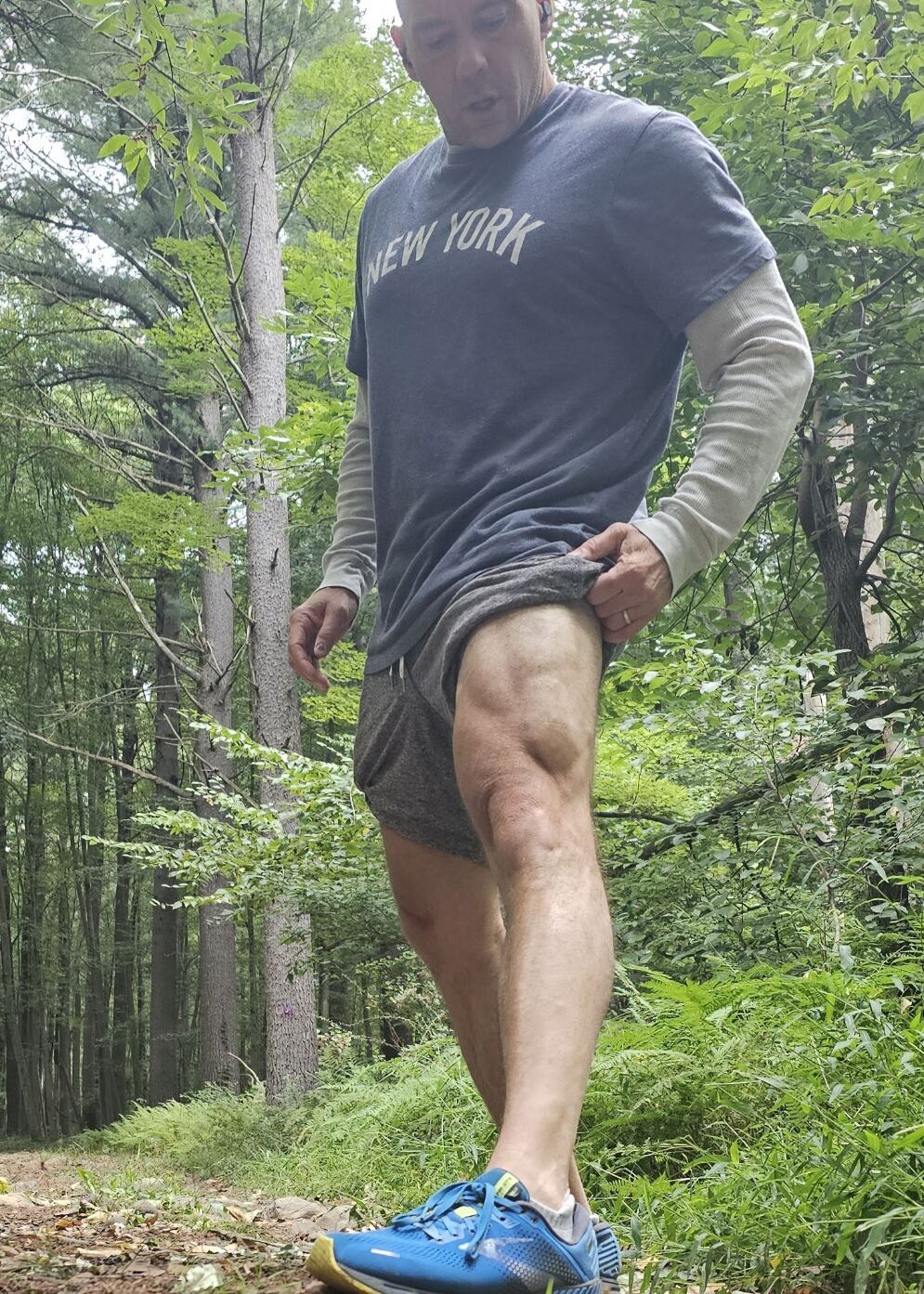
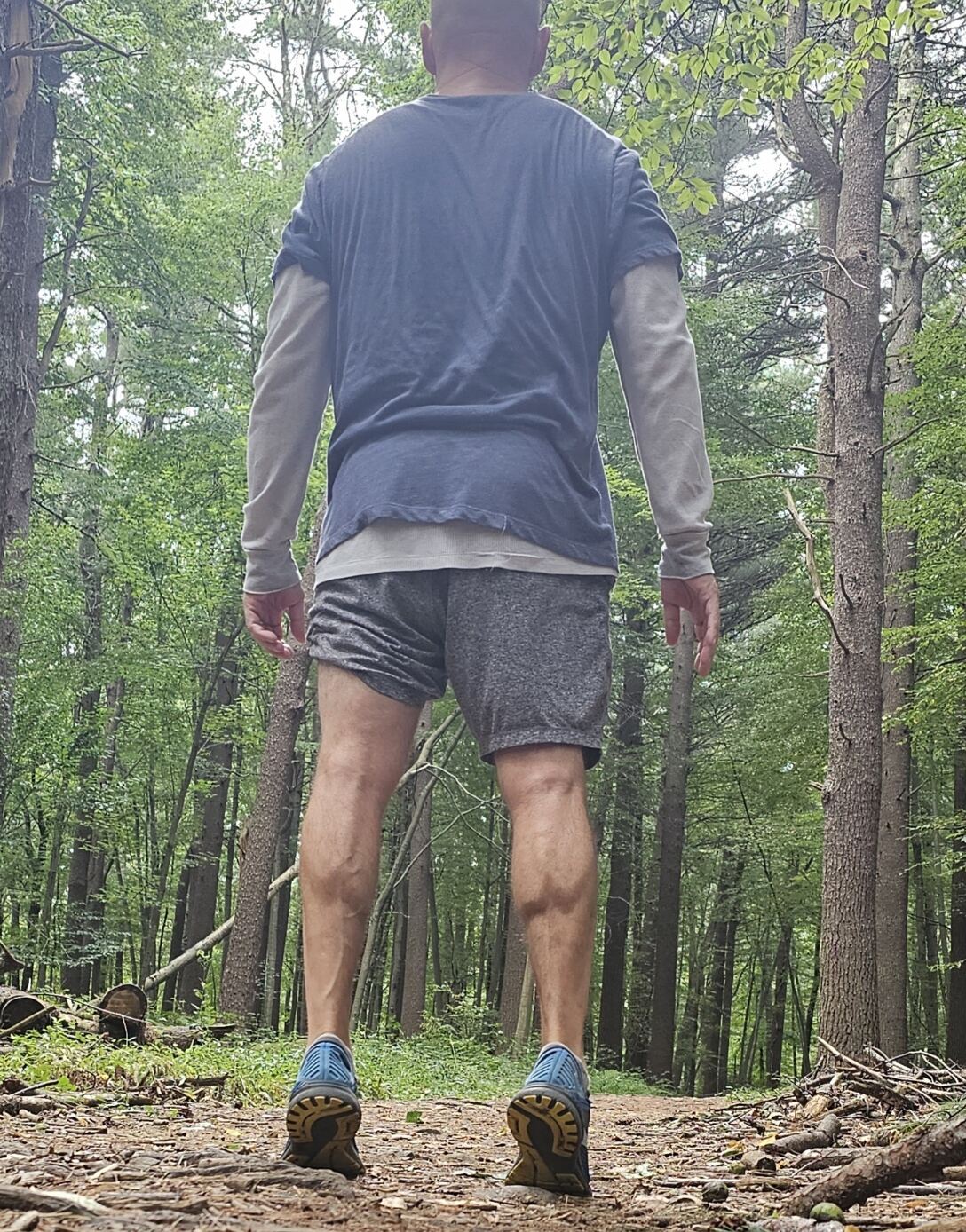
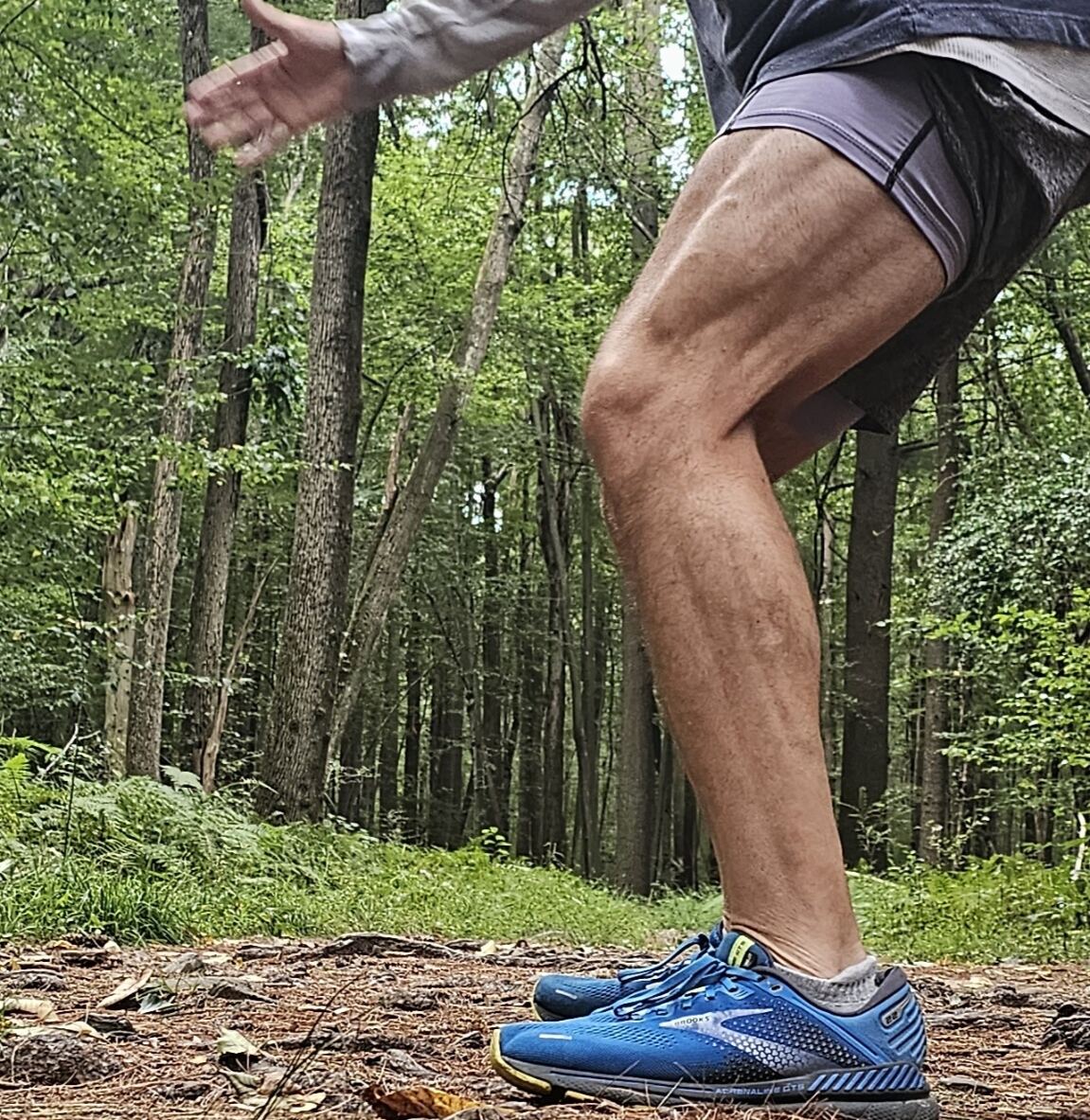
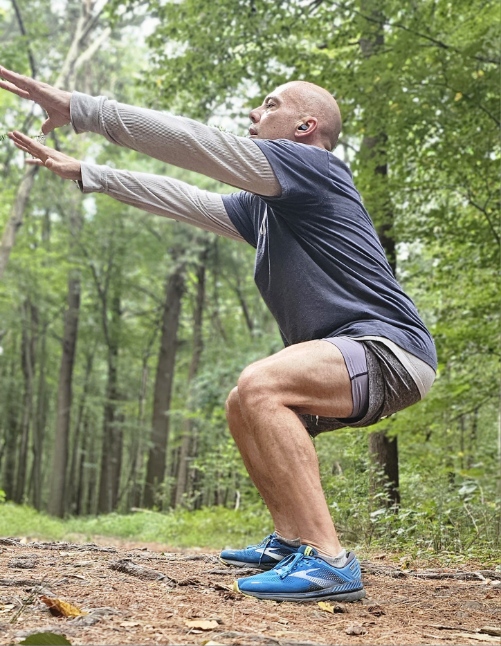
A marathon is roughly 35,000 to 40,000 foot strikes, each landing at two to three times your bodyweight. Each piece of my program has a specific job in handling that load.
Deep barbell back squats: raising the ceiling. Heavy squats build maximal strength and teach your nervous system to recruit more muscle at once. When your max goes up, each stride costs a smaller share of what you can produce, so you get the same pace for less effort. Going below parallel brings in the glutes, adductors, and hamstrings, not just the quads. Your knee bends only about 40 to 45 degrees when your foot hits the ground, so building strength well below that range makes the range you actually run in feel easy.
Slow tempo squats: building the tissue. Slow, deep, and long: ten seconds down and ten seconds up, below parallel. Slow reps keep muscles and tendons under tension far longer than normal lifting, and that's what prepared my knees, hamstrings, and hips to handle depth and load. They're also why my legs hold together late in a race when everything is tired.
Wide stance goblet squats: owning the bottom. I hold a weight at my chest, take a wide horse stance, and sink low, spending my time in the range past parallel. The wide stance puts more work on the adductors and glutes and opens the hips, while the weight in front keeps my torso upright and my core braced. It's strength in the deepest part of the squat, the range most people never train.
Deep air squats: endurance in the pattern. High rep bodyweight squats are connective tissue and joint training disguised as conditioning. They teach the legs to keep working when they're fatigued, which is exactly what the last 10K demands, and they add volume without the recovery cost of loaded work.
This is when I really got serious and began to break through my own plateaus in the woods, with no equipment.
Calf raises: protecting the most overloaded muscles in running. Your calves, especially the soleus, take the hardest hit of anything in your body when you run, with peak forces several times bodyweight on every step. They're also where many runners break down, with Achilles problems, calf strains, and shin pain. My full calf routine is coming to this page soon.
Core work: holding form when fatigue sets in. Miles 20 to 26 are where form falls apart. The hips sink, the stride shortens, and the pelvis drops side to side. The trunk control I've built through years of yoga keeps everything stacked so the power from my legs goes into moving forward.
Running hills: strength in the running pattern. Hills are where the weight room meets the road. Uphills load the glutes, quads, and calves while you're actually running, and downhills teach your legs to absorb force under control. That's where the "hill armor" from my squats pays off.